
Speed to lead is the time between a new enquiry arriving and your business making real contact with that person. Replying within 5 minutes wins because the buyer is still at their phone, still thinking about the problem and has not yet called your competitor. If your speed to lead is measured in hours, you are paying for leads that someone else converts.
I am Rajeeb Mookhopadhyay, a business growth consultant at rajeebm.pro. I build lead response systems for small businesses in the US, Canada, the UK, Europe, Australia, New Zealand and the UAE: AI receptionists, instant text replies and automated follow-up. This guide explains what the research says about speed to lead, why the first five minutes matter so much, and five practical ways to respond faster without hiring more staff.

Table of Contents
- What Is Speed to Lead?
- The Speed to Lead Research: What the Numbers Say
- Why Lead Response Time Under 5 Minutes Wins
- What Slow Lead Follow-Up Really Costs
- 5 Proven Ways to Improve Your Speed to Lead
- Speed to Lead Automation: What to Automate and What Not To
- Speed to Lead Targets by Industry
- How to Measure Your Speed to Lead
- When Speed Alone Is Not Enough
- How We Fix Speed to Lead at Rajeeb M
- Further Reading and Resources
- Frequently Asked Questions
What Is Speed to Lead?
What is speed to lead?
Speed to lead is the elapsed time from the moment a prospect contacts your business, by web form, phone call, chat or message, to the moment a person or system gives them a meaningful response.
A meaningful response is not an auto-reply that says “we will be in touch”. It is a reply that moves the conversation forward: a callback, a booking link, an answer to their question or a qualifying question back. Most businesses measure speed to lead in minutes. The best ones measure it in seconds.
Why does speed to lead matter?
Speed to lead matters because interest fades quickly, and most buyers contact two or three businesses at once and go with the first one that responds properly.
When someone fills in your form, they have a problem right now: a leaking pipe, a toothache, a legal question, a role to fill. They are at their phone or laptop and ready to talk. An hour later they are in a meeting, driving or already speaking to someone else. A fast lead response time catches them in that short window of attention.
Speed to lead vs lead response time
The two terms are used almost interchangeably. Lead response time usually refers to the first reply. Speed to lead is broader: it is a business habit and a system, covering the first reply, how quickly you qualify the enquiry, and how fast you get from enquiry to booked appointment.
The Speed to Lead Research: What the Numbers Say
Two well-known studies are behind the “reply in 5 minutes” rule. Both are worth knowing, because the numbers are easy to misquote.
The Lead Response Management study (2007). Dr. James Oldroyd and InsideSales.com analysed when and how companies called web leads. They found the odds of contacting a lead were 100 times greater when the first call was made within 5 minutes rather than 30 minutes, and the odds of qualifying that lead were 21 times greater (InsideSales.com and Dr. James Oldroyd, 2007).
The Harvard Business Review audit (2011). Researchers sent test web leads to 2,241 US companies. Only 37% responded within an hour, 23% never responded at all, and the average response time was 42 hours. Firms that tried to contact the lead within an hour were nearly 7 times as likely to qualify it as firms that waited even one more hour, and more than 60 times as likely as firms that waited 24 hours or longer (Harvard Business Review, 2011).
| Finding | Result | Source |
|---|---|---|
| Odds of contacting a lead: 5 minutes vs 30 minutes | 100 times higher | InsideSales.com / Oldroyd, 2007 |
| Odds of qualifying a lead: 5 minutes vs 30 minutes | 21 times higher | InsideSales.com / Oldroyd, 2007 |
| Companies replying within one hour | 37% | Harvard Business Review, 2011 |
| Companies that never replied | 23% | Harvard Business Review, 2011 |
| Average response time | 42 hours | Harvard Business Review, 2011 |
| Qualifying within 1 hour vs 24+ hours | More than 60 times as likely | Harvard Business Review, 2011 |
These studies are more than ten years old, and the exact multipliers will differ for your business. The direction has not changed, though. Buyers today have more choice and less patience, so if anything the gap between fast and slow responders has widened. Treat the numbers as a strong signal, not a guarantee.
Why Lead Response Time Under 5 Minutes Wins
The five-minute mark is not magic. It is roughly how long a person stays in “buying mode” after they reach out. Within that window, three things work in your favour.
- They are still reachable. They have their phone in hand because they just used it to contact you.
- They have not committed elsewhere. The first business that responds properly usually sets the price expectation and gets the booking.
- They remember you. Half an hour later, “Who is this?” is a common answer when you call back, especially if they contacted several businesses.
Good speed to lead also signals something about your service. A customer who gets a reply in two minutes assumes you will turn up on time, answer their questions and fix things quickly. A customer who waits a day assumes the opposite, even if your work is excellent.

Why do fast replies convert more leads?
Fast replies convert more leads because you reach the buyer while their need is urgent and before a competitor has answered, which makes you the default choice rather than one option among several.
There is also a simple practical reason. Almost every customer has a mobile phone with them, and 91% of US adults own a smartphone (Pew Research Center, 2025). A reply that lands within minutes arrives on the device they are already looking at.
What Slow Lead Follow-Up Really Costs
Slow lead follow-up rarely shows up on a report. The lead looks “unresponsive” in your CRM, when in fact they responded to someone else first. Here is a simple way to estimate what slow follow-up costs you.
- Count the enquiries you received last month.
- Estimate how many were answered after 30 minutes or not at all.
- Multiply that number by your normal close rate and your average job value.
For example, a dental clinic with 80 enquiries a month, 30 of them answered late, a 25% booking rate and a first-visit value of $300 is leaving roughly $2,250 a month on the table. That ignores lifetime value, which for a dental patient is far higher. These are illustrative numbers; plug in your own.
The hidden costs of slow lead follow-up
- Wasted ad spend. You paid Google or Meta for the click, and a slow reply throws that money away.
- Lower prices. Late responders often have to compete on price because the first business has already set expectations.
- Bad reviews. “Never called me back” is one of the most common complaints in local business reviews.
- Team frustration. Staff chasing cold leads all afternoon feel like the leads are poor, when the real problem is timing.
5 Proven Ways to Improve Your Speed to Lead
You do not need a call centre to fix speed to lead. You need a system that responds instantly, routes the enquiry to the right person and keeps following up. These five steps are the ones I set up most often for clients.
How to improve speed to lead: step 1, answer every call
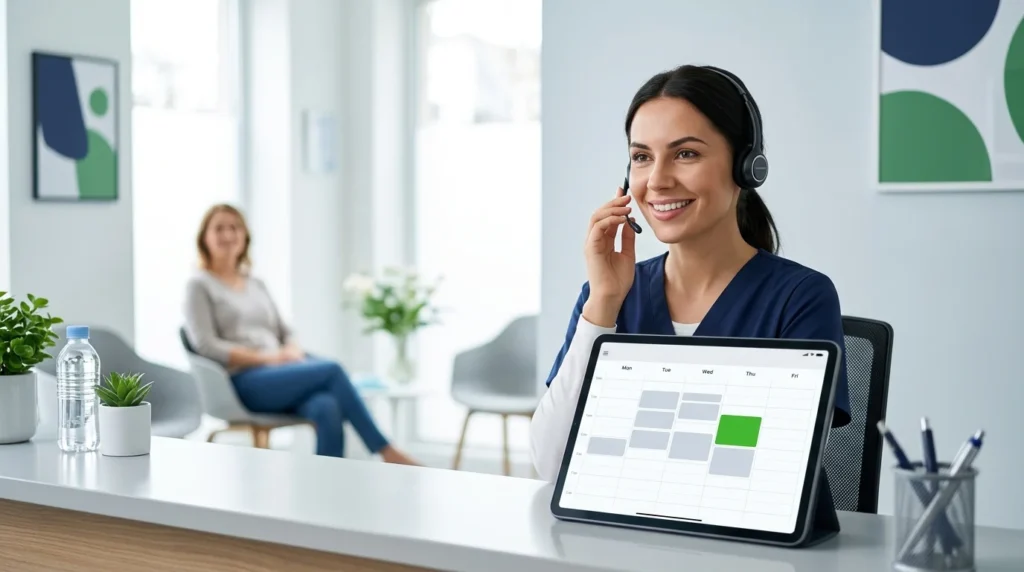
Phone enquiries are usually the highest intent, and they are also the easiest to lose. An AI receptionist can answer every call 24/7, capture the caller’s name and need, answer common questions and book the appointment straight into your calendar. If you prefer a human, a shared call rota or an answering service works too. The goal is that no call goes to voicemail during business hours.
Step 2: text back every missed call
When a call does go unanswered, send an automatic text within seconds. I covered this in detail in our guide to missed call text back. A simple message such as “Sorry we missed you, how can we help?” keeps the conversation alive and often gets a reply faster than a callback would.
Step 3: respond to web forms instantly
Every form submission should trigger an immediate, personal-sounding reply by text and email, with a booking link or a clear next step. Then alert your team so a person follows up within 5 minutes during working hours. Generic “thank you for your submission” pages do not count as a response.
Step 4: route leads to the right person
Leads go cold while sitting in a shared inbox. Route each enquiry automatically by service, location or language, and send the alert to a phone, not just an email. Make one person responsible for each lead, with a backup if they do not pick it up within a few minutes.
Step 5: keep following up
Speed to lead is about the first reply, but most sales happen later. Set up a short follow-up sequence: a call attempt, a text, an email and a final check-in over the next few days. Our guide on how to automate lead generation walks through how to build these sequences without them feeling robotic.
Speed to Lead Automation: What to Automate and What Not To
Speed to lead automation handles the first response and the admin around it, so your people can focus on the conversations that need judgement. The trick is knowing where automation helps and where it hurts.
| Task | Automate? | Why |
|---|---|---|
| First reply to a form, call or chat | Yes | Instant, consistent and works at 2am |
| Basic qualifying questions | Yes | Service, location, urgency and budget are easy to collect |
| Appointment booking | Yes | Removes back-and-forth and locks in the lead |
| Team alerts and lead routing | Yes | The right person knows within seconds |
| Pricing negotiations | No | Needs human judgement and context |
| Complaints and emergencies | No | Escalate to a person immediately |
What is the best speed to lead software?
The best speed to lead software is the one that connects your phone, website forms, calendar and CRM so that every enquiry gets an instant reply and lands in one place, rather than any single brand name.
For most small businesses that means a CRM with built-in texting and automation, plus an AI receptionist for calls. Avoid stitching together five tools that each handle one channel; leads fall through the gaps between them. If you are weighing up the costs, our AI receptionist cost guide breaks down realistic pricing.
Texting rules to respect
Instant replies by text are powerful, but they must follow local rules. In the US, the TCPA and carrier registration rules apply to business texting. In the UK, PECR governs electronic marketing, and the Information Commissioner’s Office publishes clear guidance. A reply to someone who has just contacted you is usually treated differently from marketing, but always identify your business, keep it relevant to their enquiry and honour opt-outs.
Speed to Lead Targets by Industry
Every business benefits from a faster lead response time, but the urgency varies. These are the targets I use with clients as a starting point.
| Industry | Target first reply | Best first channel |
|---|---|---|
| Plumbers, electricians, handymen | Under 2 minutes | Answered call or instant text |
| Dental and medical clinics | Under 5 minutes | Answered call with online booking |
| Law firms | Under 5 minutes | Call back with a short intake |
| Real estate agencies | Under 5 minutes | Call or WhatsApp with viewing slots |
| Recruitment agencies | Under 15 minutes | Text or email with next steps |
| B2B services | Under 1 hour | Email with a booking link, then a call |
Emergency trades need the fastest speed to lead, because the customer will keep calling until someone answers. For clinics and law firms, speed matters just as much, but the first reply also needs to reassure. See our pages on the AI receptionist for dental clinics and lead generation for law firms for examples.
In the UAE and much of Europe, WhatsApp is often the expected channel, so a fast WhatsApp reply can beat a phone call. In the US and Canada, a text or call is still the norm.
How to Measure Your Speed to Lead
You cannot improve what you do not measure, and most businesses are surprised when they first see their real numbers.
How to measure lead response time
Measure lead response time by recording the timestamp when each enquiry arrives and the timestamp of the first meaningful reply, then tracking the median and the percentage of leads answered within 5 minutes.
- Median response time: better than the average, because one lead answered after three days distorts the average.
- % answered within 5 minutes: the single best speed to lead number to track weekly.
- % never contacted: this should be zero.
- Response time by source and by hour: evenings, weekends and lunch breaks are usually where leads are lost.
A quick test is to “mystery shop” yourself. Fill in your own website form on a Saturday afternoon and call your own number at 6:30pm. Time how long it takes to get a real answer. That is your true speed to lead.

When Speed Alone Is Not Enough
Speed to lead is powerful, but it is not the whole story. To be honest about its limits:
- A fast bad reply loses the lead anyway. A rushed, generic or pushy message can be worse than a thoughtful reply ten minutes later.
- It cannot fix a weak offer. If your pricing, reviews or service do not fit the buyer, replying first just gets you a faster “no”.
- Some buyers are researching, not buying. Long-cycle B2B buyers may prefer a well-prepared email over an instant phone call.
- Automation needs a human safety net. Emergencies, complaints and complex questions must reach a person quickly.
The right approach is fast and relevant: an instant first reply that is useful, followed by a person when judgement is needed.
How We Fix Speed to Lead at Rajeeb M
At Rajeeb M (rajeebm.pro), speed to lead is usually the first thing I fix for a new client, because it makes every other marketing channel work harder. A typical setup includes:
- An AI receptionist that answers every call and books appointments.
- Missed call text back and instant replies to web forms and WhatsApp.
- Lead routing and phone alerts so the right person follows up within minutes.
- A short automated follow-up sequence and a weekly speed to lead report.
There is no advance payment. We build the system first, you test it live with real calls and enquiries, and you pay only after you approve it. You can read more about how that works on our no upfront cost pricing page.
Further Reading and Resources
- The Short Life of Online Sales Leads (Harvard Business Review)
- The Short Life of Online Sales Leads, research record (Brigham Young University ScholarsArchive)
- Lead Generation Strategies: When to Call (InsideSales.com)
- Mobile Fact Sheet (Pew Research Center)
- Direct marketing and PECR guidance (UK Information Commissioner’s Office)
Frequently Asked Questions
What is a good speed to lead?
A good speed to lead is under 5 minutes for the first meaningful reply, and under 2 minutes for urgent services such as emergency trades.
Aim to answer at least 80% of enquiries within that window during business hours, and use automation to cover evenings and weekends.
Why is the 5 minute rule for lead response so important?
The 5 minute rule matters because research found the odds of contacting a lead were 100 times higher, and of qualifying it 21 times higher, at 5 minutes than at 30 minutes.
After a few minutes, buyers move on, stop answering unknown numbers or book with a competitor who replied first.
How can a small business improve its lead response time without hiring staff?
A small business can improve its lead response time without hiring by using an AI receptionist for calls, missed call text back, instant form replies and automatic lead alerts to a phone.
These tools handle the first reply in seconds and hand the warm lead to you when you are free.
Does speed to lead automation feel robotic to customers?
Speed to lead automation does not feel robotic when the messages are short, use your business name, refer to what the customer asked about and hand over to a real person quickly.
Customers mind slow replies far more than they mind a helpful automated first message.
Is speed to lead still important for B2B and high-value services?
Yes, speed to lead still matters for B2B and high-value services, although the target can be up to an hour and the first reply should be a helpful email or booking link rather than an instant cold call.
The Harvard Business Review audit found large drops in qualification after just one hour, so a same-hour reply is still the minimum.
What happens to leads that are not contacted within an hour?
Leads not contacted within an hour are far less likely to be qualified; in the HBR study, firms that replied within an hour were nearly 7 times as likely to qualify the lead as firms that waited longer.
Many of those leads have already spoken to a competitor or lost interest by the time you call.
How much does it cost to improve speed to lead?
Improving speed to lead usually costs a modest monthly fee for an AI receptionist, texting and CRM automation, and at Rajeeb M there is no advance payment because we build and demo the system before you pay.
For most businesses, winning one or two extra jobs a month covers the cost.
Is speed to lead worth it for a small business?
Yes, speed to lead is worth it for almost every small business that gets enquiries by phone, form or message, because it turns leads you already paid for into customers instead of losing them to faster competitors.
It is less critical only if you have very few enquiries and already answer every one personally within minutes.
Reply to every lead in under 5 minutes, even when you are busy.
We set up your AI receptionist, instant replies and follow-up, test it with you live, and you pay only after you approve it.
👉 Book your free strategy call →
🎧 Or try our live AI receptionist demo first →

About the author: Rajeeb Mookhopadhyay is a business growth consultant with 20+ years of experience, a B.Com (Honours), an MBA in Marketing and Google certifications in digital marketing and Google Ads. He builds AI receptionists, missed call text back systems and lead generation automation for small businesses. Read more about Rajeeb.