
The right time to rebrand your business is when your brand no longer matches the clients, prices or services you want next, and that mismatch is costing you sales. Knowing when to rebrand your business comes down to clear signals: you have outgrown your look, your messaging attracts the wrong buyers, or a merger, new market or reputation issue has changed who you are.
I am Rajeeb Mookhopadhyay, a business growth consultant at rajeebm.pro. Over 20+ years I have guided companies through refreshes and full rebrands. This guide walks through the nine critical signs, the rebranding strategy that protects your existing customers, realistic rebrand costs and timelines, and when you should not rebrand at all.

Table of Contents
- What Is a Business Rebrand?
- When to Rebrand Your Business: 9 Critical Signs
- Brand Refresh vs Full Rebrand
- A Rebranding Strategy That Keeps Your Customers
- How Much Does a Rebrand Cost?
- Rebranding Your Website, SEO and Systems
- When to Rebrand Your Business for a New Market
- Your 30-Day Rebrand Launch Checklist
- When Not to Rebrand Your Business
- Further Reading and Resources
- Frequently Asked Questions
What Is a Business Rebrand, and Why Does Timing Matter?
What is a business rebrand?
A business rebrand is a deliberate change to how your company looks, sounds and positions itself, which can include your name, logo, colours, messaging, website and the type of clients you target.
A rebrand is bigger than a new logo. Your brand identity is the promise customers associate with you, so a real rebrand changes that promise to match where the business is going rather than where it started.
Why does the timing of a rebrand matter so much?
Timing matters because rebranding too early wastes money on a problem you do not have, while rebranding too late lets an outdated brand quietly cap your prices and growth.
Familiarity is valuable: buyers consistently lean towards brands they already recognise, and every rebrand spends some of that recognition. That is why deciding when to rebrand your business should be driven by evidence, not boredom with your logo. A good rebrand earns the recognition back quickly; a poorly timed one simply loses it.
When to Rebrand Your Business: 9 Critical Signs
If three or more of these signs describe you, it is time to look seriously at a rebranding strategy. One sign alone usually calls for a targeted fix rather than a full business rebrand.
1. You have outgrown your original customers
Many businesses start by serving whoever will pay, then grow into a premium niche. If your brand still speaks to bargain hunters while you now sell to corporate buyers, you are leaving money on the table.
2. You cannot raise prices without pushback
Brand perception sets price expectations. When prospects compare you with cheaper competitors because you look like them, an updated brand identity can justify the value you already deliver.
3. Your website and materials look outdated
Buyers judge credibility in seconds. A dated website, inconsistent fonts and an old logo signal a business that may not keep up, even if your service is excellent.
Old websites are often slow too, and that costs leads directly: Google research found 53% of mobile visits are abandoned when a page takes longer than three seconds to load (Google, 2017). If your site is both dated and slow, it is a strong signal of when to rebrand your business online, even if the logo can stay.
4. Your messaging attracts the wrong leads
If your enquiries are full of poor-fit clients, your messaging is doing the wrong job. A rebrand clarifies who you serve, which filters out time-wasters before they call.
5. You have added new services or entered new markets
A name or tagline built around one service can confuse buyers of the others. Expanding into the UK, EU, Australia or the UAE can also expose names that do not translate well.
6. A merger, acquisition or new partner has changed the business
Two brands under one roof create confusion. A business rebrand gives combined teams and customers one clear identity to rally around.
7. Your brand is inconsistent across channels
Different logos on your van, website and LinkedIn quietly erode trust. Consistent brand presentation has been linked to revenue increases of up to 23% (Lucidpress/Marq, 2019).
8. Your reputation needs a genuine reset
If past problems still follow your name, a rebrand can help, but only after the underlying issue is fixed. A new identity on top of the same problems simply delays the next complaint.
9. Competitors all look the same as you
When every business in your market uses the same blue logo and the same promises, standing out becomes a growth lever. A distinctive brand identity makes you memorable and easier to recommend.
Brand Refresh vs Full Rebrand: Which Do You Need?
Not every brand problem needs a full business rebrand. Choose the smallest change that solves the real problem.
| Factor | Brand refresh | Full rebrand |
|---|---|---|
| What changes | Logo polish, colours, fonts, website design | Positioning, messaging, often the name |
| Best when | The business is right but looks dated | The business has changed direction or market |
| Risk to existing customers | Low | Medium, needs careful communication |
| Typical timeline | 2 to 6 weeks | 2 to 6 months |
| SEO impact | Minimal if URLs stay the same | Needs a redirect and migration plan |
In my experience, most small businesses asking when to rebrand their business actually need a strong refresh plus clearer messaging. A full rebrand is the right call when your audience, offer or name genuinely no longer fit.
A Rebranding Strategy That Keeps Your Existing Customers
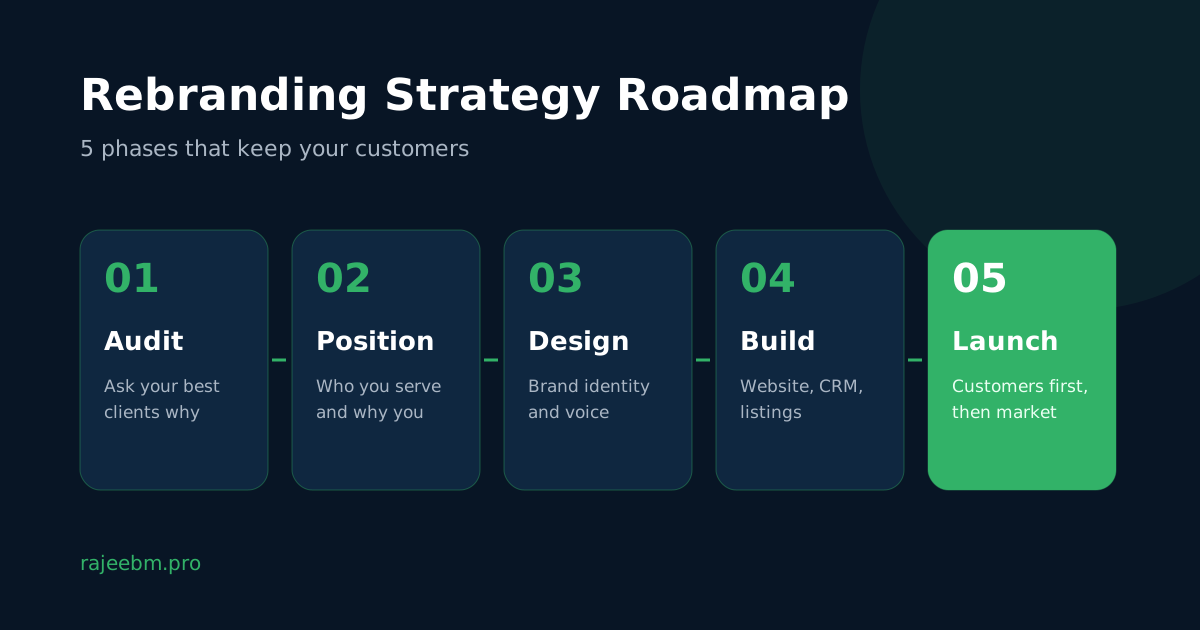
A rebranding strategy should protect what already works while fixing what holds you back. These five phases keep risk low.
How to rebrand without losing customers
To rebrand without losing customers, involve your best clients early, explain why you are changing, keep the service they value identical and announce the new brand before it goes live.
- Audit: interview five to ten of your best clients and ask why they chose you. Keep those strengths at the centre of the new brand.
- Position: define who you serve, what you solve and why you are different in one clear sentence.
- Design: create the brand identity, including logo, colours, typography and tone of voice, plus simple usage rules.
- Build: update your website, email templates, proposals, social profiles, signage and Google Business Profile together.
- Launch: tell customers first, then the market. Explain what is changing and what stays the same.
Why your team must be part of the rebranding strategy
Staff are the brand on every call and visit, so a rebranding strategy that skips them usually fails in delivery.
Brief your team on the new positioning, give them a one-page script and make sure phone greetings, email signatures and uniforms change on launch day.
How Much Does a Rebrand Cost, and How Long Does It Take?
Rebrand cost depends on scope more than anything else. Below are typical ranges for small and growing service businesses; your quote will vary by market and complexity.
| Scope | What it usually includes | Typical timeline |
|---|---|---|
| Visual refresh | Logo update, colour palette, brand guide | 2 to 4 weeks |
| Refresh plus website | The above plus a new website and messaging | 4 to 8 weeks |
| Full business rebrand | Research, positioning, possible new name, all assets | 2 to 6 months |
What drives rebrand cost up?
Rebrand cost rises with a name change, trademark searches in several countries, physical assets like signage and vehicles, and the number of websites and systems to update.
Hidden costs are often in the digital work: redirects, updated listings, new email templates and retraining. Plan for them from day one rather than discovering them after launch.
Can you rebrand with no upfront cost?
Yes. At Rajeeb M (rajeebm.pro), corporate branding is one pillar of our growth system, and we work on a build-first model: we design your new brand identity and website, show them to you live, and you pay only when you approve. See how our no upfront cost pricing works.
Rebranding Your Website, SEO and Systems Without Losing Rankings
The digital side is where most rebrands quietly lose leads. A new name or domain without a migration plan can wipe out years of search visibility overnight.
How to protect your SEO during a business rebrand
Protect your SEO during a business rebrand by keeping URLs where possible, setting up 301 redirects for every changed address and updating your Google Business Profile and listings on launch day.
Google explains site moves and redirects in its Search Central guidance on site moves. Submit the new sitemap, request indexing for key pages and monitor Search Console for errors in the weeks after launch.
Update the systems customers touch
A rebrand is the ideal moment to modernise how customers reach you. Update your CRM templates, booking confirmations, invoices and chatbot greetings so every touchpoint reflects the new brand identity.
Many clients pair a rebrand with an AI receptionist and automated follow-up, so the new brand also answers faster and converts more of the attention a launch creates.
When to Rebrand Your Business for a New Market
Entering a new country is one of the most common reasons to rethink a brand. What works in one market can feel wrong, or even mean something different, in another. Before you decide when to rebrand your business for expansion, check how your name, tone and visuals land with local buyers.
United States and Canada
North American buyers respond to clear, benefit-led messaging and visible proof such as reviews and case results. Canadian businesses serving Quebec also need French-language assets, which affects your naming and brand identity choices from the start.
United Kingdom, Ireland and the EU
UK and European buyers tend to prefer understated, credible messaging over hype. Check that your business rebrand respects local spelling, GDPR-friendly data practices on your website and any trademark conflicts across EU member states.
Australia and New Zealand
Australian and New Zealand customers value straight talk and local relevance. A brand that feels imported or overly corporate can struggle, so local service-area pages and familiar language help a rebranding strategy succeed.
United Arab Emirates
In the UAE, premium presentation and trust signals carry significant weight, and many businesses serve both English and Arabic speakers. Plan bilingual assets and test your name in both languages before you commit to a new brand identity.
Your 30-Day Rebrand Launch Checklist
Once you have decided when to rebrand your business, the launch month decides whether customers notice a confident upgrade or a confusing change. Use this checklist in the final 30 days.
- Day 1 to 7: finalise brand guidelines, approve the website on a staging link and prepare the redirect map.
- Day 8 to 14: update email signatures, proposal templates, invoices, CRM templates and chatbot greetings.
- Day 15 to 21: brief the team, prepare social profile updates and draft the customer announcement.
- Day 22 to 28: email key clients personally, then schedule the public announcement.
- Day 29 to 30: go live, switch redirects on, update your Google Business Profile and directory listings, then monitor Search Console daily.
A rebrand handled this way feels like a natural next step to customers rather than a disruption, which is exactly the outcome a good rebranding strategy aims for.
When Not to Rebrand Your Business
Sometimes the honest answer to when to rebrand your business is “not yet”. Avoid a rebrand in these situations:
- The real problem is the product or service. A new logo will not fix poor delivery.
- You are bored, but customers are not. Familiar brands sell; personal fatigue is not a strategy.
- Cash flow is tight. A half-finished rebrand looks worse than a consistent old one.
- You have no time to manage the launch. A rushed rollout creates the inconsistency you were trying to fix.
If one of these applies, a targeted fix such as clearer messaging or a faster website usually delivers more growth for less risk.
Further Reading and Resources
- Google Search Central: moving a site with URL changes
- WIPO: trademark basics before choosing a new name
- Google Business Profile Help: updating your business details
- How our done for you marketing process works
- Generative engine optimization for your new brand
Frequently Asked Questions
How do I know when to rebrand my business?
You should rebrand your business when your brand no longer matches your target clients, prices or services, and that gap is measurably costing you leads or revenue.
Look for three or more of the nine signs above, such as attracting the wrong leads or struggling to raise prices.
How long does a business rebrand take?
A brand refresh usually takes 2 to 6 weeks, while a full business rebrand with research, a possible name change and a new website takes 2 to 6 months.
Complexity, approvals and the number of physical assets are the biggest factors.
Will rebranding hurt my Google rankings?
Rebranding will not hurt your Google rankings if you keep URLs where possible, add 301 redirects for every change and update your Google Business Profile at launch.
Rankings typically settle within weeks when the migration is handled properly.
What is the difference between a rebrand and a brand refresh?
A brand refresh updates how your existing brand looks, while a rebrand changes what your brand stands for, who it targets and sometimes its name.
Start with a refresh unless your business direction has genuinely changed.
How much does a rebrand cost for a small business?
Rebrand cost for a small business ranges from a modest visual refresh to a larger investment for a full rebrand with naming and a new website, depending on scope and market.
With Rajeeb M you pay nothing upfront: we build first and you pay after approving the result.
Is rebranding worth it for a small business?
Rebranding is worth it when an outdated or unclear brand is blocking higher prices, better clients or new markets, because the right brand identity raises perceived value.
It is not worth it if the real problem is service quality or if cash flow cannot support a full rollout.
Can I rebrand my business without changing the name?
Yes, many successful rebrands keep the business name and change the positioning, messaging, visual identity and website, which protects recognition and search rankings.
Keeping the name is usually the safer choice when customers already know and trust it. Change the name only when it is confusing, limiting your growth into new services or markets, or tied to a reputation you need to leave behind. Either way, the decision about when to rebrand your business should come from customer feedback and sales data, not personal taste.
Should I tell customers before I rebrand?
Yes, tell your best customers before launch, explain why you are changing and confirm what stays the same, so the rebrand builds trust instead of confusion.
A short email and a personal call to key accounts are usually enough.
Not sure if it is time to rebrand?
Get an honest brand and website audit. If a rebrand makes sense, we design it and show it live before you pay anything.
👉 Book your free strategy call →

About the author: Rajeeb Mookhopadhyay is a business growth consultant with 20+ years of experience, a B.Com (Honours), an MBA in Marketing and Google certifications in digital marketing and Google Ads. He helps small businesses rebrand, rebuild their websites and automate lead generation. Read more about Rajeeb.